
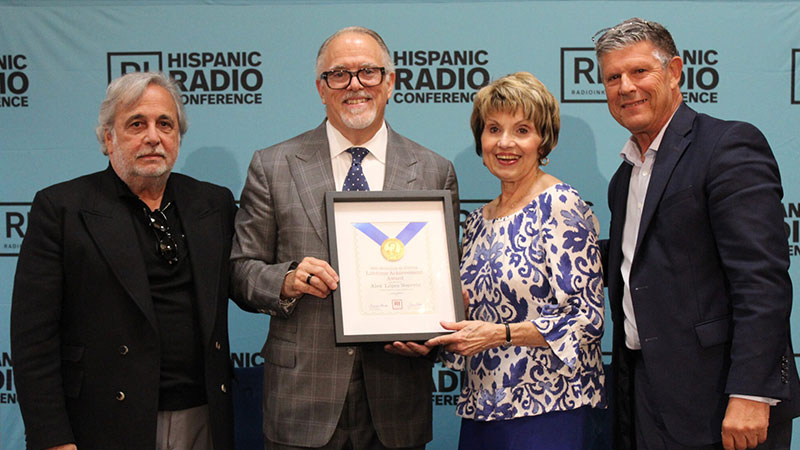
Alex López Negrete was honored with the Medallas de Cortez Lifetime Achievement Award for his incredible contributions to Hispanic radio at the 2025 Radio Ink Hispanic Radio Conference. In this interview, he explores how his passion for radio and music jump-started his career, the importance of using cultural insights to drive deeper connections and results for brands, and the need for Spanish-language and culturally relevant media to authentically connect with the full spectrum of Hispanic Consumers.
ALEX LÓPEZ NEGRETE OF LOPEZ NEGRETE COMMUNICATIONS
For more than four decades, Alex López Negrete, co-founder and CEO of Lopez Negrete Communications, has been a driving force in multicultural marketing. He is also a passionate advocate for the power of radio. From his days as a sales rep for McGavren Guild Radio to serving as anon-air commentator for the Houston Rockets (while simultaneously running his own agency), López Negrete has long had a strong connection to local radio.
In recognition of his contributions to Hispanic radio, Radio Ink will honor Alex López Negrete with the Medallas de Cortez Lifetime Achievement Award at the 2025 Hispanic Radio Conference. We were also able to speak with him about his career in radio and advertising, while also touching on themes of culture, community, and the importance of forging true connections among brands, people, and local media.
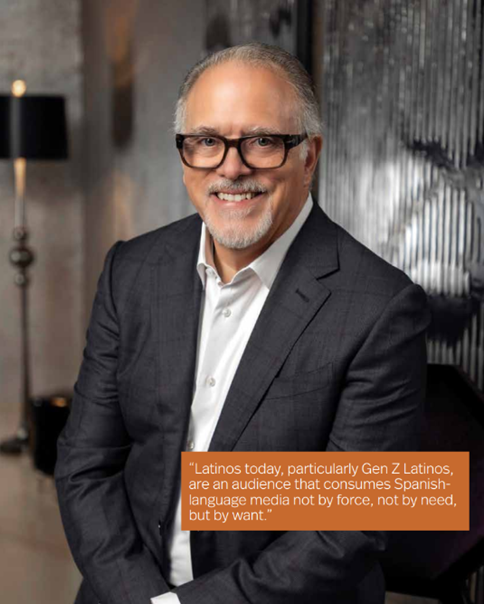
Radio Ink: What’s your origin story? What got you into advertising, and what led you to develop your agency?
López Negrete: Radio! I started my career in the early to mid-’80s in Houston. I attended the University of Houston, initially majoring in business. Later, I changed my focus to what was then called RTV, which encompassed radio, television, journalism, and marketing; at that time, their program wasn’t very developed. Subsequently, I switched back to business and altered my minors to include marketing and radio and television production, among other subjects. However, this was during the oil bust in Houston, when Cathy and I had already begun our college journey and had decided to get married and start our lives together. I was fortunate that there was an ad for McGavren Guild Radio at the placement center at my beloved U of H. I did not know much, if anything, about how the radio industry worked. I just knew I loved radio; I loved music. I interviewed with Shane Fox, who was responsible for opening the Houston office. We hit it off, and he essentially threw me into hot water, saying, “Here’s the station list. Here’s a manual on how you run the market-run ratings machine. These are grid cards and these are rate cards, and we’ll see you later.”
It threw me into the sales side of national radio very quickly, but I loved it. I understood the power of radio because I had so little baggage, and I was so in love with the idea of radio, music, and formats. I think the way I sold radio was a little bit different. It was less numbers-based. Less “Here’s what the Arbitron book says,” et cetera … and more, “How does this fit into your buy and what you’re trying to achieve as an advertiser?” It also opened me up to the advertising agency world, because those were my clients. So it all started with radio.
One of the stations we represented at McGavren Guild Radio was Majic 102 here in Houston, and I had a very good relationship with their management team. They said, “Why don’t you come on to work at local radio, and we’ll teach you how to sell! ”The general manager at the time was Monte Lang, the consummate radio man. I learned so much from Monte and the folks at Majic102, and after some time in local radio sales doing promotions, I felt that my time of learning everything I needed to learn on that side was done.
That’s when Cathy and I took the leap to open the agency. But radio was critical to my start and my understanding of the marketplace. The very first check we wrote to the media as an agency was to a radio station. So radio is very much a part of our origin story as an agency and for me as an advertising professional.
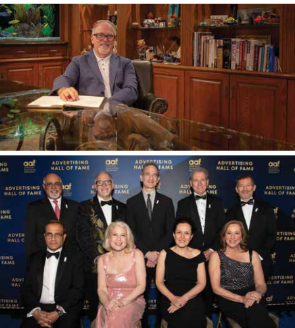
Radio Ink: The Lopez Negrete Communications mission is “Maximum Return on Cultural Intelligence.” What is cultural intelligence?
López Negrete: It’s understanding your target market and being able to activate it with actionable insights, and activating those insights in a creative way and in a way that generates results for your clients. There is a return on investment, but we believe that activating cultural insights delivers maximum return on cultural intelligence. It’s about knowing your customer and understanding the insights that will drive them to action and ultimately benefit the business.
That’s what we mean. If you bank on cultural intelligence, if you bank on the insights that drive the business, you will deliver an improved ROI. It’s not just about reaching people, it’s about really connecting with them. In our case, it’s the Latino consumer.
Radio Ink: There is a belief throughout the industry that Latinos can be effectively reached through total market media, as there is cultural crossover. We know that people who identify as Hispanic or Latino are consuming total market media, but do you think that there’s still very much a need for Spanish-language media?
López Negrete: Total market proponents will tell you that you can reach Latinos using general market media. You can reach some Latinos. But if you really dig into the math, you’re not going to reach the full potential of the spectrum of the Latino audience. There is still a significant presence of Spanish-dominant language, and when it comes to radio, music, and culture, they play an enormous role. That’s pretty much the sirens’ wail, if you will, on total market. It’s inaccurate; it’s an incomplete picture.
In my book, there’s a real difference between reaching and connecting. The cultural piece is key. And when you’re talking radio, even if you’re not talking music formats, Spanish-language talk is extraordinarily effective. Why? Because they’re touching on things that are very relevant to the community, very relevant to their daily lives. In the environment that we’re living in right now, local really matters, and immediate really matters. Nothing delivers that but radio.
Because let’s say you have a station that is delivering, in a market like Houston, pretty significant Spanish-language numbers, even though it might be an English-language station. If I’m trying to really connect with those Latino customers, my message will be in English, but it will have cultural cues, and even some language, and a dash of an accent to make sure that listener says, “Oh, that’s me. That’s for me.”
And that’s cultural intelligence.
Radio Ink: I’ve been in the conversation about the frustration many have about Hispanic radio not getting its fair share of advertising dollars, particularly because of the economic power of the Hispanic community in the U.S., which is enormous. I sometimes use the phrase “culture panic” in that I think that some brands, or even some business owners, are uncomfortable with cultural differences. They panic, and they give up. Do you think that happens?
López Negrete: I think some of it is analysis is paralysis. I really do encourage marketers to just do it. Just go for it. This is a wonderful customer. It’s a loyal customer. It’s a very tolerant customer. Latinos, we know your world is not built around us. But we try our best, and so I think there’s analysis paralysis. I think there’s some apprehension: “Gee, am I going to do this right? Am I going to upset somebody? Am I going to get bad press?” I think that’s lesser. Then there are people who use those things as simply excuses not to do it. Marketers are more challenged than ever before. Their budgets are tighter. They have fewer people to do the job they need to do. And a lot of them are saying, “Oh God, do I really need to do different copy? Do I really need to have that extra set of meetings? Do I really need another agency?” Yet they are expecting a different outcome. What I tell marketers is, “Look, if you’re expecting a different outcome, you have to embrace the idea of a different process.” It’s very much worth the investment.
You talked about the potential of the Latino consumer segment. If we were a standalone economy, we’d have a GDP of $3.6 trillion. We are scratching the 70 million mark in population. I think that’s worthy of looking at a different process, worthy of having another agency, worthy of having different copy. I think it’s very much worth it. Here I am, 40 years later, still professing the same gospel.
You also have to look at the Latino listener. The Latino listener is younger than any other listener in the American population. So what does that mean? One, we are the ones getting married more than others. We are the ones buying engagement rings. We are the ones looking for new housing. We are starting to buy major appliances. We are the ones starting to buy cars. When you look at a customer lifetime value, there’s nothing better than the Latino consumer segment. We are actually at the forefront of opening businesses. That’s the thing about that GDP number I told you about. A lot of people confuse it with spending power. It’s actually more important than that. When you look at that number, it is causal. It’s not coincidental. That GDP number is an active, engaged number. We are creating businesses and jobs, generating circular income, meaning that we are generating income that is making its way through the economy. So not only are we important from a workforce perspective, we are also important from an economic perspective.
Radio Ink: I’m from Chicago, and I’ve mostly lived in Latino and multicultural neighborhoods. I’ve observed the entrepreneurial spirit in the Hispanic community.
López Negrete: Give us a shot. We’ll take it. And we know what’s beautiful about our community is that the lines are so blurred between personal and business. Start looking at these microbusinesses. Let’s say you’re a financial services institution, you do right by one family, you’re going to get five families. You do right by those five families, you might get five businesses. It’s really a powerful thing.
The other thing I wanted to mention was that, having had the agency now for 40 years and witnessed so many changes in the media, our population, our culture, and the landscape, is that, yes, Latinos today, particularly Gen Z Latinos, are an audience that consumes Spanish-language media not by force, not by need, but by want. They are bicultural. They are bilingual. It’s what we call the 200 percenters. I would much rather cater to a customer who has the luxury of choice than one who does not have a choice.
And I think that’s one of the interesting changes that we witnessed, back at the turn of the century. I know that sounds so long ago, but it’s only 25 years ago. A lot of those total market proponents were saying, “In the next generation, it’s not going to matter. Everybody’s going to be the same. English is going to be the prevailing language. Culture and language won’t be a significant factor.”
I predicted that it would be quite the opposite, that this particular generation would look at language and culture as the things that make them — that language and culture would become more pervasive again, because it is about choice. And look how it’s played out. You’ve got Bad Bunny on Saturday Night Live. Look at where the big hits musically are and what’s being played on the radio. It’s us.
Radio Ink: In the Southwest, you’ll hear a lot of regional Mexican music, but when you are in Los Angeles or on the East Coast, you will hear more of the Latin urban or tropical music. There’s the local aspect to the programming, but also a cultural connection between the on-air talent and the people. Is this why traditional radio continues to have such an appeal to the Hispanic audience over satellite or streaming?
López Negrete: Satellite and streaming certainly have their place. They’re growing and they’re doing very well in our space. But local radio has always, particularly from the Latino perspective, been a very accurate mirror of our community. I think radio has been really good to ourcommunities. Then you’ve got the idea of timeliness and localism. This hasnever been more important than now, for our community. What’s going on? Whatare the topics of importance? It’s a way for local businesses to truly engagewith their local audiences, something that streaming services struggle to do, Ithink. Local radio, regardless of format, and I would like to include Spanishtalk radio, is magnificently important.
We were the Houston Rockets’ agency of record for a numberof years. They were one of our first clients. It was about 1988 or 1989 — Iknow I’m talking ancient history, but the Rockets were always veryforward-thinking. There was a general manager, Steve Patterson, who was a veryadventurous, smart marketer. We had done a lot of initiatives targeting women,and it came time to talk about Latinos. We knew we couldn’t just throw money atthe market. We couldn’t just advertise in the market. We had to get the sportcloser to the people. We negotiated a deal with what was then InfinityBroadcasting’s KXYZ-AM. We started broadcasting the games, and we jumped in hard and fast to make sure we were able to bring the sport closer to thepeople. We had a lot of community events, and I ended up becoming the colorcommentator for the Rockets. We couldn’t find one, so I just trained and didit. We had a play-by-play guy, Rolando Becerra, the consummate broadcaster.However, there was a void in the color commentary. Steve turned to me and said,“Brother, tag — you’re it! You’ve got all summer to train for this thing.”
I did that from 1989 to 1995. When you’re behind the mic you have a pre-show and a post-game show, and you really get connected to thelocal community. It becomes so real. And I think that was a real gift for me asan agency.
Radio is important. I believe in it as a medium. I believein it as a part of the American way of life and as a critical infrastructuretool in this country.
Radio Ink: What is the one thing you tell marketerswhen shaping a radio campaign and developing creative?
López Negrete: Create to the media. It’s easy to say, "We have a radio version of the TV or video.” No! This medium is important. Itgoes through another set of receptors to the audience. I think that too manyjust do versioning, if you will. No. Take advantage of the medium, and takeadvantage of that moment that the listener is giving you. We produce verydifferently for streaming — the work that we do that might air on Spotify or Pandora is a little bit different than what we do for terrestrial radio, becauseit’s a different context. Create for the medium, and take advantage of what itoffers you.
The two mediums I love writing for the most are actuallyradio and outdoor, because with radio, I’m going to say something that we usedto say at McGavren Guild, 40-plus years ago: it’s the theater of the mind. Nomedium gives you that like radio. And, of course, outdoor, baby! If you can’tdo it in seven words, you ain’t doing it! So you have to be really judicious.Not unlike with radio, you have a distance and a time factor in play. If youcan’t communicate quickly, you’re out.
And it’s the same thing. There’s nothing more painful thanboring radio.
Radio Ink: Many radio listeners have strongrelationships with on-air talent, particularly those who are using socialmedia. Do you see potential there for advertisers to bring their brand togetherwith the on-air talent and the station’s brand on social media?
López Negrete: Absolutely. I see social media as atremendous aggregator. And the online part, which is not always social media,is also an aggregator because, you’re right, these personalities used to live in one dimension, which was aural only. And now they can connect visually withaudiences. Listeners can actually watch them broadcast if they so choose,through digital or social media. They can have that deeper relationship. Withthose personalities that are part of their lives, you’re adding that extradimension, that additional glue, if you will, and additional humanization.
I think that agencies and marketers that only place audioschedules on terrestrial radio are leaving a lot of potential on the table. Ithink that social media and digital become that additive that radio never haduntil now, and I think it’s extraordinarily powerful.
Radio Ink: In Hispanic radio, there’s Shoboy — Edgar Sotelo, host of The Shoboy Show. He does really good stuff on Instagram,posting questions listeners have and inviting answers and conversation from hisfollowers. It’s a magnificent use of social media for his own brand.
López Negrete: Let me take you back again on a tripto the past. The classic remotes that we used to do in radio, the remote unitswould show up at the grocery store, or at your place of retail, or the rodeo,or wherever it was. That was the social of the time. That was a way for ourlisteners to engage with those personalities, that station, in a moremeaningful way. Now you’ve got social, it’s a lot easier. It’s a lot faster. Wehad a promotion for a client, Community Coffee, based in Louisiana. The challengewas to start driving that brand here in Texas, and we created theseinitiatives. Of course, we did audio and we had our spots and we had ourschedules and all that kind of thing, but we had these cafecitos Saturday andSunday mornings at key points of retail. We would set up a little sofa area.We’d serve coffee, and listeners could come in and meet the personalities andhave a cup of coffee, on the air. You have no idea how effective that was. Thataudience is thirsty for that connection.
Radio’s an interesting thing. When you really start lookingat the impact of social and digital on what is a very audio medium, you startunderstanding that it’s about identity. And that’s cultural intelligence.
Radio Ink: One last question. From an agencyperspective, what would you like radio stations, sales managers, accountexecutives, to know about working effectively with an agency?
López Negrete: Don’t sell me just numbers. Numbers are important, and we have to be accountable to our clients for driving audiences and driving efficiencies. That’s a given, but don’t stop there. Tellme about how your station is connecting with the community. Tell me what you’re doing in the community. Tell me more about the human side of your personalities. Show me ways that I can use you to connect deeper and more effectively — not just efficiently, effectively — with your audience. I want your audience to move to action on behalf of my clients. Help me do that. Don’t just deliver me numbers.
What are your hobbies?
Music is my number one hobby. I have been playing guitarsince the fourth grade, have had bands, recorded, and performed. I was quiteserious about it, but it became clear that it was just a hobby, particularly asCathy and I set out to open our own agency. I am fortunate enough to have beenable to weave my hobby into my work, having performed assorted guitar parts insome of our jingles and custom music.
Who is/was your role model, and why?
I don’t have one role model, honestly. I have several. I'm blessed this way. For fatherhood, I have to mention José Adán Treviño, the founder of Pueblo Broadcasting (KXLN-TV Channel 45), who became like a second father to me. He called me his “hijo postizo.” He was kind, strong, loyal, upright, dedicated, and beloved. We lost Adán this year, unfortunately. There’s Ray Patterson, close family friend and the original President/GM for the Houston Rockets. Ray had what I call “practical pragmatism” and a Socratic way of teaching that helped me think through so many hurdles early on, as a man and an entrepreneur. I miss him; we lost him a few years back. And, while it will sound very corny, my own wife and partner, Cathy. Her constancy, strength, and unerring character are something I truly admire — and try very hard to live up to.
What are you reading right now?
I try to balance my business reading and my leisure reading, like many entrepreneurs. Business reading usually wins out, though. Currently, I just finished “For the Culture” by Marcus Collins. If you want to get an updated perspective of the role of culture in 21st century marketing, I highly recommend it. From a personal perspective, I’m making my way through a series of little books by author Derek Sivers. Easy, but fun and very practical and pragmatic. I highly recommend them. Some of the titles include “Useful Not True,” “How to Live,” “Hell Yeah or No,” and “Anything You Want.” You can devour any of these on a weekend. Right now I’m reading “Useful Not True.”
What is your favorite movie?
Oh, that’s a tough one. Some of these might get me cancelled(laughs). “Three Amigos” is one of them. But seriously, I think my all-time favorite might be “2001 Space Odyssey,” directed by Stanley Kubrick. So prescient, timeless. I think that one would have to be the one.
Who are the three most interesting people you know(outside your family), and why?
If you had 30 minutes and a recorder, who would you interview, and why?
There are so many. But I think I would choose David Ogilvy. He is an advertising man I have always admired tremendously — and would love his take on today’s ad scene, which of the tenets he believed in continue to be valid or which may have changed, and how has technology shifted the basics of our craft. David was an intensely intuitive and disciplined marketer, a believer that consumers want to be communicated to in an intelligent way, a lover of great copy. Half an hour with him, today, would be such a gift.
Three favorite podcasts?
There are so many. OK, these are three I seem to gravitate to more often: “Future Perfect” “The Revolución Podcast” “The New CCO”
Your most embarrassing career moment?
You don’t spend 40 years in the business without a few of those moments. There’s one that, while embarrassing, ultimately ended well. We were making a final presentation to a potential client when they turned to my lead creative at the time and asked which project had gone badly and what he learned from it. My team member proceeded to describe a project where we had a great deal of responsibility but no real authority to manage the variables, while having to serve three different clients simultaneously. He had a very heavy Spanish accent, and kept saying, ‘It was chaos here, chaos there, chaos everywhere.’ I knew exactly what he meant — I was used to his broken English. Our client turned to me, confused, and said, ‘Alex, why is your guy talking about cows?’ I responded, ‘No, sir, he is saying ‘chaos’, not ‘cows.’ His response? ‘Oh, hell, welcome to the family.’ And we got the business. Embarrassing? Perhaps. Memorable? Absolutely.
Most proud career achievement so far?
Cathy, and our team at large, have been blessed by many, many wins and achievements over the years. However, I think the one that sits at the top of the list is maintaining our agency as independent, Latino family-owned, privately held, and financially stable (and growing) for four decades. It hasn’t been easy — it’s been a labor of love, constancy, and persistence. We cherish our independence because it allows us to care for our people, evolve the business, and serve our clients in a distinctly personal way. This independence fuels our spirit of innovation and commitment, creating a deep sense of purpose toward our people, clients, and community that remains both uncommon and continuously inspiring.
Source: Radio Ink
